


The Smart Photographer’s Guide to Buying a Used Camera

Buying a used camera can be one of the smartest investments a photographer makes. Whether you’re upgrading to a full-frame mirrorless system, picking up a lightweight travel camera, or diving into photography for the first time, buying pre-owned gear can save you hundreds—or even thousands—of dollars without sacrificing image quality.
But not all used cameras are created equal.
A great deal can quickly become an expensive headache if you overlook hidden damage, excessive wear, or signs of poor maintenance. The good news? With a little knowledge and a careful eye, buying a pre-owned camera can be an incredible way to expand your kit while staying within budget.
At The Shutterbug, we’ve helped photographers in Oregon and beyond find quality used cameras for decades. Here’s what every photographer should know before buying second-hand camera gear.
Why Buy a Used Camera?
The camera world moves fast. Every year, manufacturers release newer models with upgraded autofocus systems, faster processors, and improved video features. But here’s the secret many photographers already know:
📸 Older cameras are still capable of creating amazing images.
In fact, many professional photographers continue using older DSLR and mirrorless cameras because image quality often remains excellent for years after release.
Buying used allows photographers to:
Save money on high-end gear
Upgrade sooner without overspending
Try new camera systems affordably
Invest more into lenses and accessories
Reduce electronic waste by extending gear lifespan
For many photographers, buying pre-owned gear is how they built their first serious camera kit.
1. Buy From a Trusted Camera Store
Where you buy your used camera matters just as much as what you buy.
While online marketplaces and person-to-person sales may offer tempting prices, they also come with risks. A camera may look fine in photos while hiding issues like sensor damage, water exposure, autofocus problems, or internal corrosion.
That’s why purchasing from a trusted camera store is often the safest option.
At a reputable camera shop, pre-owned cameras are typically:
Professionally inspected
Tested for functionality
Cleaned before sale
Evaluated for cosmetic and internal condition
Backed by knowledgeable staff
Many stores also offer return periods, warranties, or repair support if issues arise later.
Another major benefit? You can actually hold the camera before buying it. Ergonomics matter more than many beginners realize, and trying a camera in person can help you determine whether it feels comfortable and intuitive to use.
2. Don’t Ignore Cosmetic Damage
Small scratches happen. Cameras are tools, and some wear is normal. But noticeable dents, cracked rubber grips, bent corners, or deep scratches can reveal a rough history.
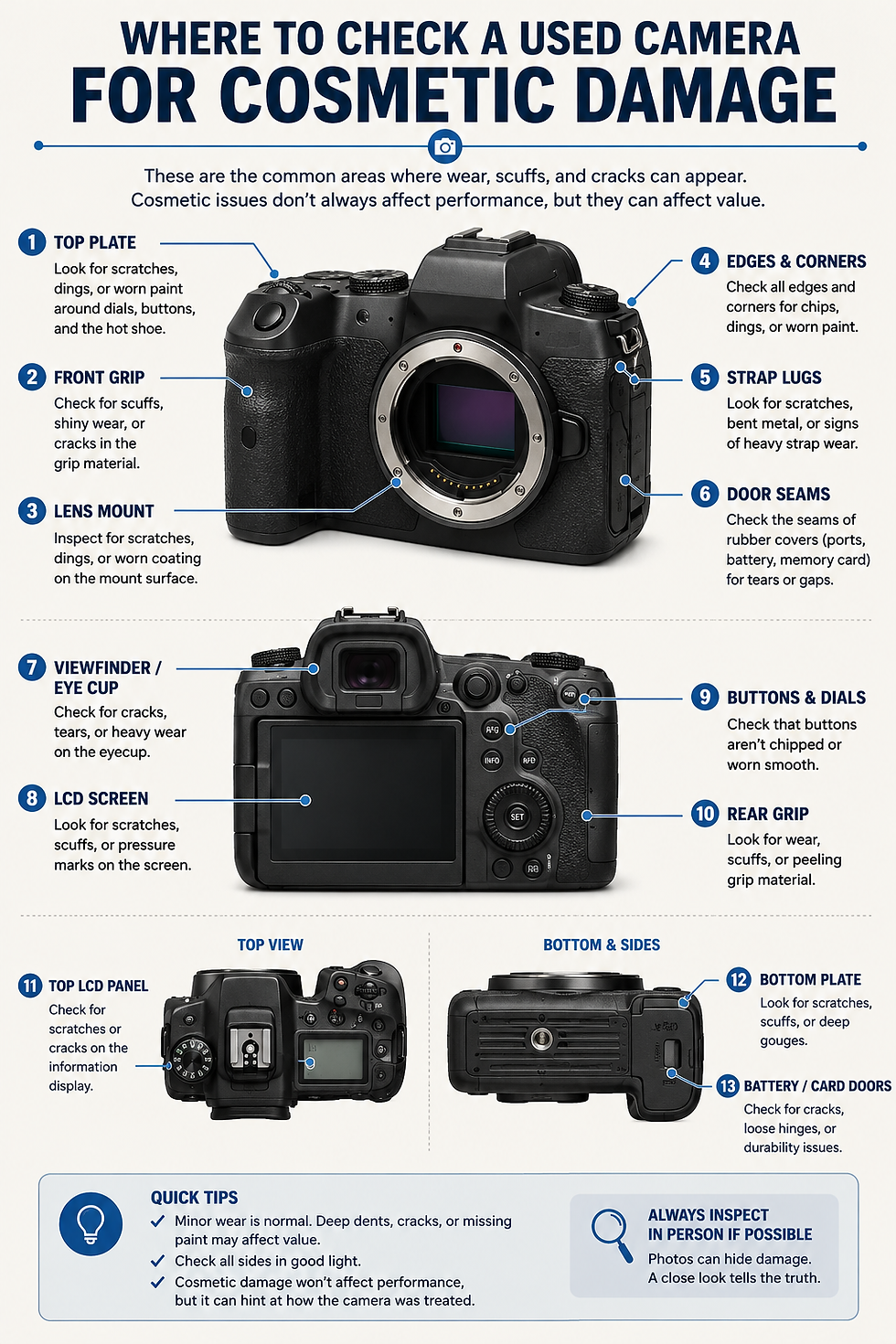
Exterior damage may indicate:
Hard drops or impacts
Poor storage conditions
Exposure to moisture or sand
Heavy professional use
Even if the camera powers on, internal components could have suffered damage over time.
Pay close attention to:
Battery compartment condition
SD card slot integrity
Corrosion around ports
Loose buttons or dials
Bent lens mounts
If the outside looks heavily abused, there’s a good chance the inside has seen some stress too.
3. Check the Shutter Count
One of the most important things to inspect on a used camera is the shutter count. Think of it like mileage on a car.
Every time you take a photo on most DSLR and mirrorless cameras with mechanical shutters, the shutter mechanism actuates once. Over time, those moving parts wear down.
Most modern cameras are rated for a certain shutter life expectancy:
Entry-level cameras: around 100,000 actuations
Mid-range cameras: 150,000–200,000
Professional bodies: 300,000+
A camera with a low shutter count has generally seen lighter use.
That said, shutter count isn’t everything. A well-maintained camera with 80,000 clicks may still outperform a neglected camera with only 10,000.
Still, checking the count gives photographers valuable insight into how heavily a camera has been used.
4. Inspect the Sensor and Lens Carefully
The sensor and lens are the heart of image quality.
Even a great camera body can produce poor results if the lens or sensor has issues.
What to Look for on a Lens
Examine the front and rear glass carefully under good lighting.
Watch for:
Scratches
Chips
Haze or cloudiness
Fungus growth
Excessive dust
Oil on aperture blades
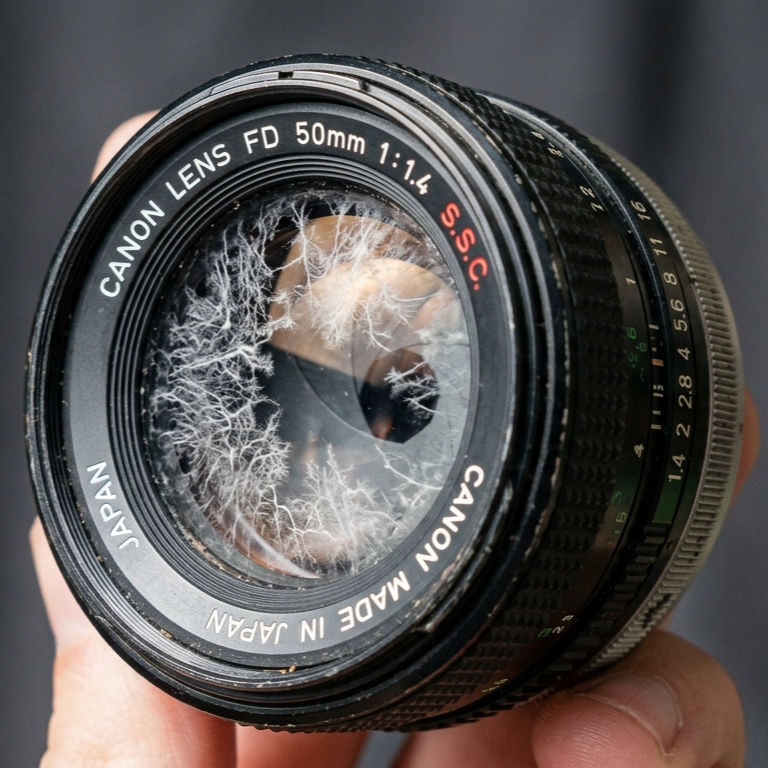
Lens fungus deserves special attention. It often appears as spiderweb-like patterns inside the glass and can permanently damage optics if left untreated.
Also check:
Zoom ring smoothness
Focus ring responsiveness
Lens mount condition
Autofocus performance
Don’t Forget the Sensor
If possible, test the camera by taking a photo of a bright, plain surface at a narrow aperture like f/16. Sensor dust or dead pixels may become easier to spot.
Minor dust is normal and usually cleanable. Large marks, streaks, or clusters of dead pixels may indicate bigger issues.
5. Test Every Button, Dial, and Port
A camera can look pristine while hiding functional issues.
Before purchasing, test:
Autofocus accuracy
Touchscreen responsiveness
Rear LCD brightness
Memory card slots
HDMI and USB ports
Hot shoe connection
Flash functionality
Battery charging
Rotate every dial. Press every button. Sticky controls, delayed responses, or inconsistent performance may point to wear or hidden internal problems.
6. Research the Camera Before You Buy
One of the best things photographers can do before purchasing used gear is simple:
👉 Research the model thoroughly.
Some cameras become legendary for reliability and image quality. Others may have known issues involving overheating, shutter failures, autofocus defects, or battery drain.
Read reviews, watch sample videos, and compare specifications. Photography forums and communities are often excellent resources for real-world experiences from long-term users.
This is especially important if you’re deciding between DSLR and mirrorless systems, or considering older professional camera bodies.
7. Remember: Lenses Matter More Than Most People Think
Many photographers focus heavily on the camera body—but lenses often have a bigger impact on image quality and creative possibilities.
A great lens on an older camera can still produce stunning results.
When budgeting for used gear, consider prioritizing:
A quality portrait lens
A sharp everyday zoom
A versatile prime lens
Image stabilization features
Good lenses also tend to hold value longer than camera bodies.
Used Cameras Can Be an Incredible Value
Buying a used camera doesn’t mean settling for less. In many cases, it’s the smartest way to access better equipment while staying within budget.
Whether you’re a beginner photographer looking for your first interchangeable lens camera or an experienced shooter upgrading your kit, taking time to inspect used gear carefully can save money and prevent future frustration.
At The Shutterbug, we’ve proudly helped photographers find quality new and pre-owned cameras for decades. Our team carefully inspects used gear and helps photographers find the right camera, lens, and accessories for their style, experience level, and budget.
From mirrorless cameras and DSLRs to lenses, film cameras, and photography accessories, we’re here to help you make a confident purchase—and get out shooting faster.


nice
I tried Drive Mad free out of curiosity and ended up replaying several stages just to improve my timing. The physics make each run feel different https://drivemadgame.cc