


A Photographer’s Guide to Fireworks in Full Color

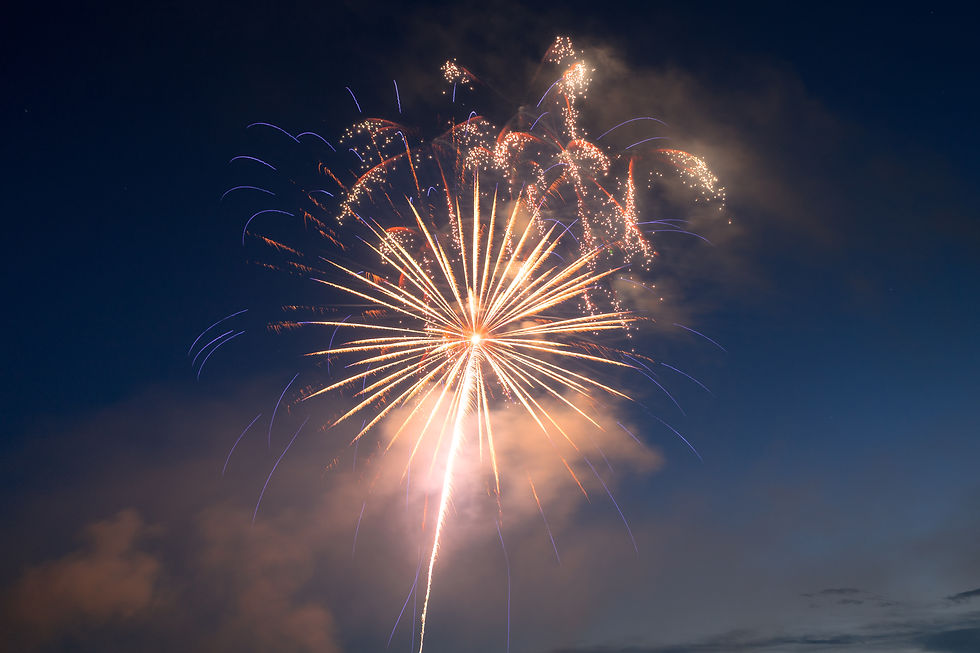
There’s a moment just before fireworks begin that every photographer recognizes. The crowd settles, conversations fade into background noise, and cameras slowly come out of bags like everyone is instinctively syncing up for the same reason. Then the sky breaks open.
What follows is a mix of chaos and rhythm—bursts of light that last only seconds, yet leave behind images that can feel surprisingly timeless when captured well. Fireworks photography sits in that interesting space between technical precision and pure reaction. You can plan everything perfectly and still be surprised. That’s part of the appeal.
Whether you’re shooting on a DSLR, mirrorless system, or even experimenting with manual controls on a smartphone, the fundamentals stay surprisingly consistent. It’s less about having the “perfect” camera and more about understanding how to work with light that doesn’t wait for you.
Finding the Scene Before the Sky Lights Up

Long before the first explosion, scput out your location. Fireworks themselves are temporary, but the environment you choose to frame them in will define the entire photograph.
Photographers often arrive early to study how the scene might interact with the sky above. A skyline can turn bursts of light into something cinematic. Even a simple tree line can anchor the frame and give scale to something otherwise overwhelming. Using a wide-angle lens can help capture everything in the scene!
Waterfronts are especially powerful because of reflections. When fireworks mirror across a lake or river, the scene doubles in impact without any extra effort. Suddenly, the image becomes less about a single sky and more about a full environment responding to light.
The Foundation: Keeping Everything Steady
Fireworks photography is built on long exposures, which means stability isn’t optional—it’s everything. Even tiny movements can soften what should be sharp, clean bursts of light.

A tripod becomes less of an accessory and more of a necessity here. It doesn’t have to be expensive, but it should be stable enough to withstand small vibrations from wind or nearby movement. Once your camera is locked in, you’re essentially creating a fixed canvas where light will paint itself over time.
A remote shutter release (or built-in timer) helps eliminate the final bit of shake from pressing the shutter. It seems minor, but in long exposure photography, small details like this often separate crisp results from slightly blurred ones.
Helpful stability essentials:
A sturdy tripod (more important than brand or price)
Remote shutter release or camera timer
Fully charged batteries (long exposures drain power faster than expected)
Extra memory cards for continuous shooting
Camera Settings That Work as a Starting Point
One of the biggest shifts in fireworks photography is moving away from automatic settings. The camera can’t predict explosions of light—it can only record what you allow it to see. Manual mode gives you control over how that light is shaped over time.
A widely used starting point looks like this:
Mode: Manual (M)
ISO: 100–200 for clean images
Aperture: f/8 to f/16 for defined bursts
Shutter speed: 2–10 seconds (or Bulb mode for full control)
Focus: Manual, set to infinity
These settings aren’t strict rules—they’re a baseline. Fireworks vary in brightness, distance, and frequency, so part of the process is adjusting as the show unfolds.
What matters most is understanding the relationship between time and light. A short exposure captures a single burst in isolation. A longer one layers multiple explosions into a single frame, creating something more dynamic and complex.
Timing: Learning the Rhythm of the Show
Fireworks photography becomes much easier once you stop reacting randomly and start anticipating patterns. There’s usually a rhythm to how fireworks are launched—brief pauses, clusters of bursts, then sudden finales.
Many photographers switch to Bulb mode for this reason. It allows you to decide exactly how long “enough” is, rather than relying on guesswork. Over time, you start to feel the timing instead of calculating it.

Focus: Set It Once and Trust It
Autofocus struggles in low light, especially when the scene is constantly changing. Fireworks are bright for a second, then gone, which causes most autofocus systems to hunt endlessly.
That’s why manual focus is the standard approach.
A simple method works well:
Set your lens to infinity
Or focus on a distant light before the show begins
Switch to manual focus so it stays locked
Once this is done, you can stop thinking about focus entirely and concentrate on composition and timing.
Gear That Helps You Go Further
While fireworks photography doesn’t require specialized equipment, a few tools can make the process smoother and more flexible.
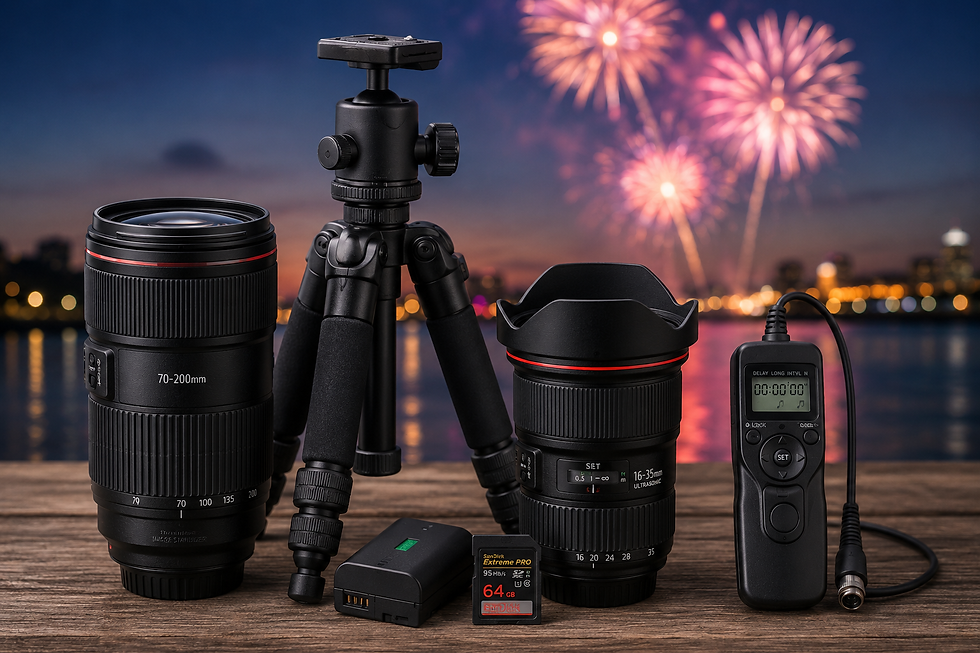
Useful additions include:
Wide-angle lenses for capturing full scenes and skies
Zoom lenses for isolating dramatic bursts
Remote shutter releases or intervalometers for precise timing
Tripods with solid weight and stability
Camera bags with quick access for fast adjustments
Extra batteries and memory cards for long shooting sessions
None of these are mandatory, but each one removes a small obstacle, allowing you to focus more on creativity and timing, and they are all available in store at The Shutterbug!
Final Thoughts: Let the Moment Lead the Frame

Fireworks photography sits in a unique space between control and unpredictability. You can prepare everything correctly and still end up surprised by what happens in the sky. That’s part of what makes it so compelling.
Some of your favorite images might come from carefully timed exposures. Others might come from moments where everything ran a little longer than expected, or where smoke softened the light in unexpected ways.
The key is staying present enough to respond.
Because in the end, you’re not just photographing fireworks. You’re photographing a moment that disappears almost as quickly as it appears—one that only exists for the brief time you’re willing to stand still and watch the sky change.
If you need anything, stop by! The Shutterbug will be open from 10am - 4pm July 4th!
Most importantly... Have a Happy, Memory-Filled 4th of July!


dghdgh
I tried Drive Mad free out of curiosity and ended up replaying several stages just to improve my timing. The physics make each run feel different https://drivemadgame.cc